- Beyond The Layers
- Posts
- Tapping into the Power of Nostalgia - Featuring Julian Jenkins
Tapping into the Power of Nostalgia - Featuring Julian Jenkins

Mihir Parekh
October 08, 2023
With a gentle yet familiar piano soundtrack, the whimsical animation of a fire demon, and a moving castle, the 2004 Studio Ghibli classic “Howl’s Moving Castle” transported me to a world that seemed simpler and more innocent. While director Hayao Miyazaki delves into complex themes of war, love, and compassion, it was the film’s ability to evoke a deep and lingering sense of nostalgia that I found most powerful.
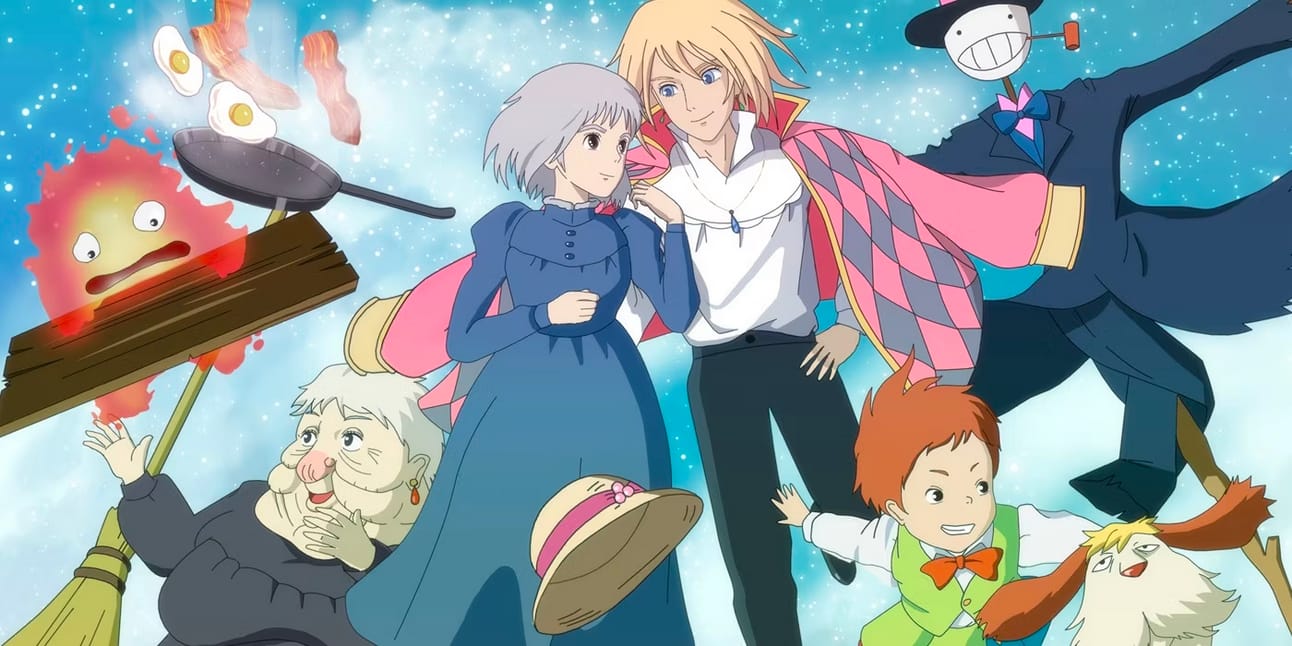
The characters of Howl’s Moving Castle
While nostalgia often anchors us to the past, it has also been described as a “self-regulatory existential resource that people naturally and frequently use to navigate stress… and find the motivation needed to move forward with purpose”. The scientific literature has shown that connecting with nostalgic memories (compared with thinking about a desired future) can create a greater sense of meaning (Routledge, 2011). Embracing nostalgia during difficult times, particularly by recalling why we embarked on challenging paths or remembering key milestones, can remind us why we started something and why we should keep going.
Another study by Tilburg et al. 2015 showed that in a written task, participants who were told to think of nostalgic memories prior to writing, demonstrated greater creativity relative to a baseline group. This connection between nostalgia and creativity isn’t confined to controlled studies either. Today's guest, Julian Jenkins, taps into the power of nostalgia through his illustration. Reminiscing long midnight drives listening to the sounds of 1980s synthwave and progressive house music, Julian creates illustrations that combine these musical elements with technological advances during his childhood.
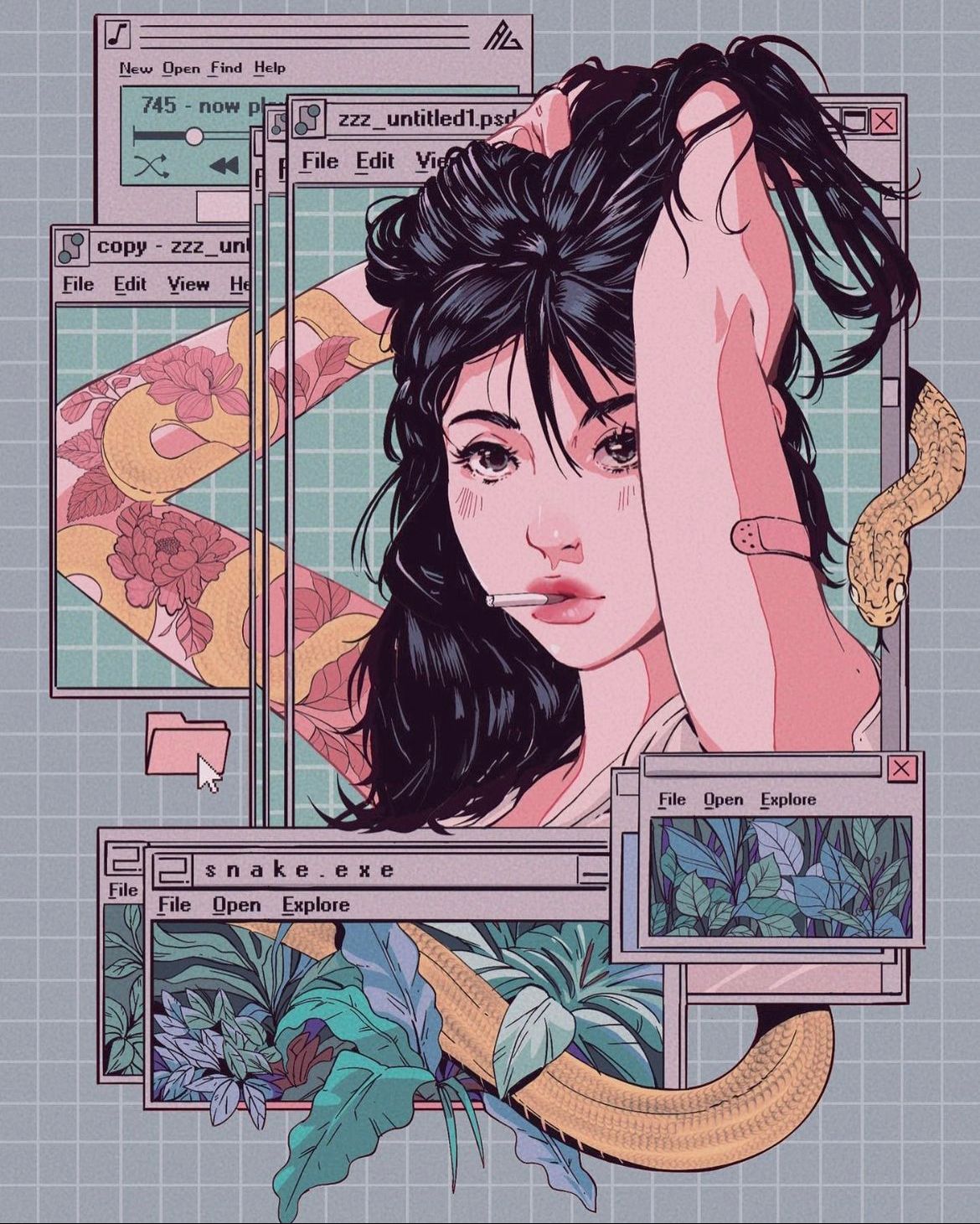
“7:45”
One example, is Vaporwave, a subgenre of both electronic music and an art style. Musically, Vaporwave “reconfigures dance music from the 1980s and early 1990s through the use of chopped and screwed techniques, repetition, and heavy reverb.” Likewise, I see this chopped-up style and repetition through the use of retro PC windows in Julian’s work.
What inspired you to combine retro PC vibes, nature, and city pop?
When I listen to Citypop, Vaporwave, Synthwave and other similar genres I get very nostalgic about my childhood days growing up in the early 90's when technology and media such as anime were getting more and more mainstream. When creating my illustrations I wanted them to represent those themes in a way that others would feel the same nostalgic vibes I get whenever I experience those forms of media. "7:45" is one of my favorite and most challenging illustrations I've worked on. My goal was to create a piece that blended modern and retro aesthetics together but didn't conflict too much but compliment each other in a way that also provided a sense of nostalgia and pav homage to vaporwave and early 90's technology.
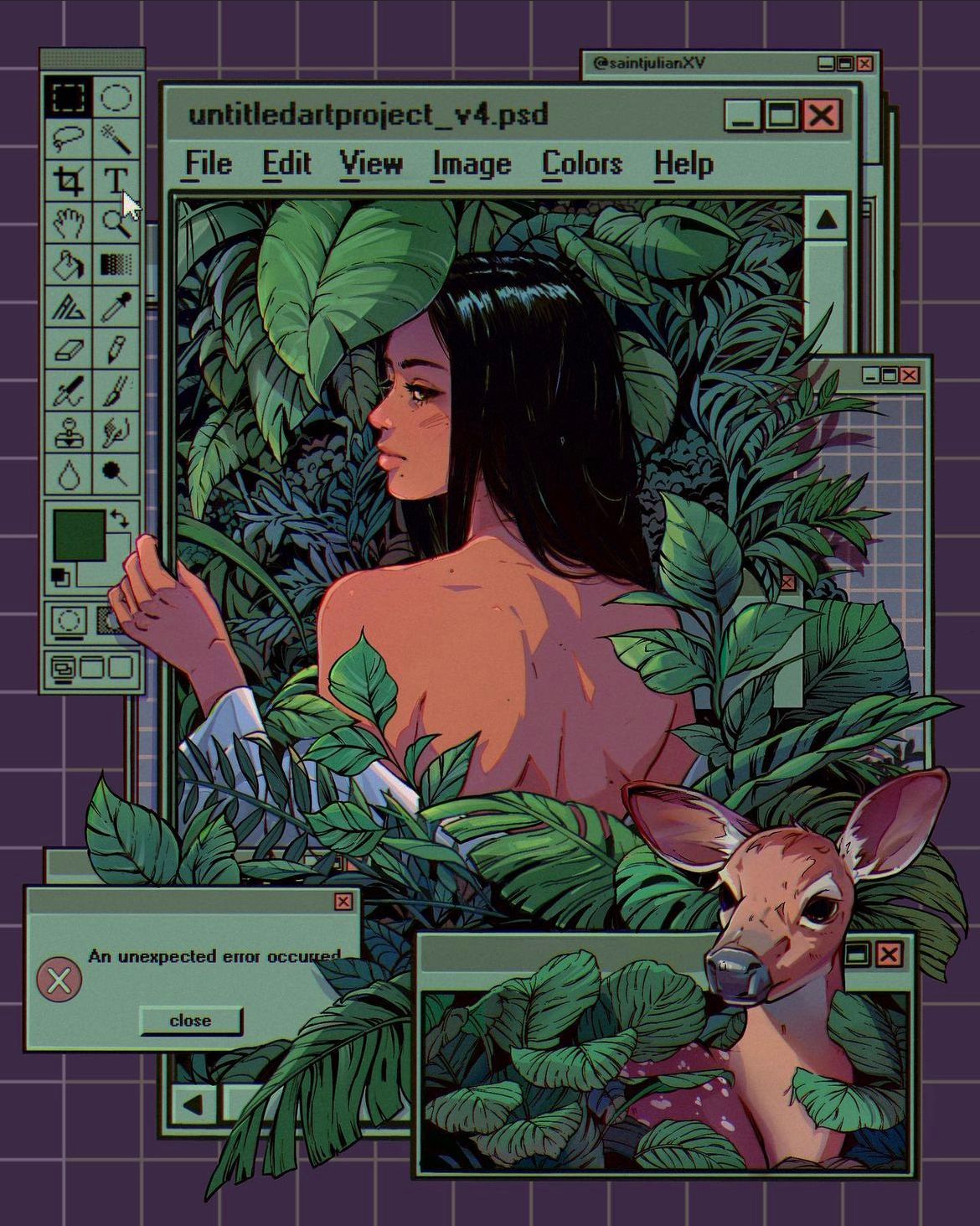
“Hidden in Your Word”
Creativity can come from the ability to take risks and venture into places where others have never been. How do you think about this when it comes to your own art?
I take inspiration from a lot of things, whether its admiring another artists' work, music, going for a walk, or chatting with friends and family, I use just about everything as a source of inspiration. One thing I have also found extremely helpful is to find artists who's works I love. I have so many art and illustration books from various artists, I look at how they use color, form, composition and then I take that information and think what can I do to push and make it unique in my own way.

“NightRider”
What lessons did you learn moving from digital to physical content? What has been your favourite piece of art in physical form and why?
I've learned a lot of lessons working with various types of physical printed media. I've learned that sometimes what looks good on a screen, may not always look great once printed. For example, I have to be very mindful of document sizing and DPI, because working from my iPad and spending hours working on details could be lost when sending to print, as well as color and vibrancy! It's been a delicate dance learning what works and what doesn't, but when everything lines up and comes out right, the results are amazing.
With that being said, I love holographic stuff! I remember how excited I was opening my first pack of Pokémon cards and seeing a holographic Blastoise. I just love how cool holographic stuff in general look, so when i first started making my art available for others to enjoy I decided on making a series of stickers based on one of my favorite video games. Since then, I am currently working on holographic posters of some of my RECENT illustrations (*coming soon ;)*), and they look absolutely bad-ass and I cant wait to make them available for others to enjoy as well.

As portrayed through Julian’s illustration, embracing nostalgia can not only serve as a potent catalyst for creativity but also as a reminder, especially during difficult times, of why we embarked on challenging journeys in the first place. There is a subtle, yet profound, beauty in looking back even as we move forward.
If you’d like to explore Julian’s other work, I’d highly recommend you follow his journey on Instagram and check out his store here!